
What is actually leaking? That question decides whether a water heater leak costs a little or a lot. Relief valves weep when they wear out or when household pressure runs high. Drain valves, especially the plastic ones found on many factory tanks, start dripping as they age. Fittings on top of the tank corrode where copper meets steel, and flexible connectors fail at the gasket. Condensation can mimic a leak for weeks on a gas unit or in a humid space. And sometimes the tank itself has rusted through. Across Vineland, NJ, we sort out which one you have before recommending a thing.
A leak call with us starts with evidence, not guesses. The technician dries everything off so fresh water shows where it starts, then checks the relief valve and its discharge line, the drain valve at the base, and every connection on top. Gas heaters get a look inside the burner area, because water there can be normal startup condensation or a sign of a tank that has failed. A relief valve that keeps releasing water means we also test pressure: static pressure above roughly 80 psi, or a missing expansion tank on a closed system, will make even a new valve drip. Findings come first; the repair follows.
With the source confirmed, the fix is often simple. A new T&P valve, a brass drain valve in place of a weeping plastic one, fresh dielectric fittings or supply connectors, and an expansion tank or pressure-reducing valve where pressure is to blame can all be handled on the spot. A corroded tank is different. No sealant or patch will hold, so we explain replacement honestly and walk through the choices. Before we leave, we can add a drain pan with a drain line and a leak sensor, especially for heaters in attics, closets, or upstairs. Call (856) 208-8557 for leak repair in Vineland.
What homeowners call us about most is Water Heater Repair in Vineland and Water Heater Replacement in Vineland. Start there if you're not sure what you need.
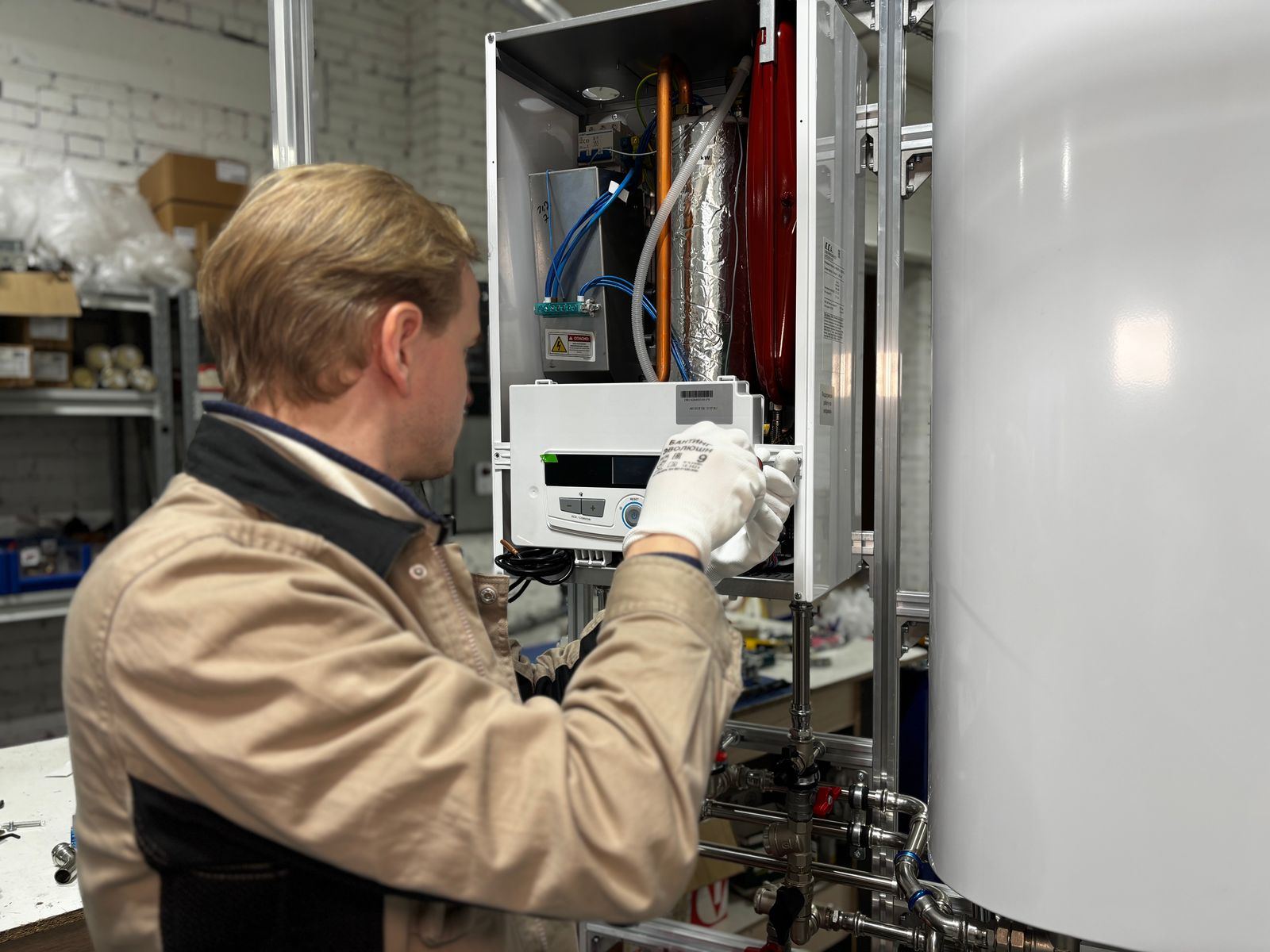
How to Tell Something Is Wrong
Water heaters usually give plenty of warning before they fail, as long as you know what to look and listen for. Here are the most common indicators that it's time to call a professional:
- A musty odor or soft floor around the heater location
- A water bill that rises without any change in usage
- Moisture or mineral crust at the end of the relief valve pipe
- Mineral buildup or rust around the hot and cold connections
- A weeping drain spigot on the lower front of the heater
- Brown hot water along with moisture around the tank bottom
- Moisture or rust flakes under the burner access cover
- A wet floor near the water heater that keeps coming back
Small Symptoms, Big Consequences
Tanks rarely fail all at once. They corrode from the inside for months, and the warning signs show up long before the floor gets wet. At the first hint of a problem, reach out to Vineland Water Heater at (856) 208-8557 and we'll take a look.
Get Water Heater Leak Repair Handled Today
Our experienced technicians are standing by to help.
Call (856) 208-8557 TodayYour Water Heater Leak Repair Questions Answered
Why Professional Water Heater Leak Repair Matters
The hardest part of leak repair is the diagnosis. Water travels along pipes and the outer jacket before it drips, so the puddle rarely marks the source, and harmless condensation on a gas unit or a cold tank can pass for a leak. Guessing leads to replacing the wrong valve or, worse, missing a tank that is about to fail. The safety side matters as well: a relief valve that is discharging is protecting the tank, and plugging it is dangerous. Old fittings can snap when forced, and wet floors near 240-volt wiring is a real shock hazard.
Our technicians trace leaks methodically and fix the cause, not just the drip. We start by drying the unit, watch for fresh water, test water pressure when the relief valve is involved, and check for expansion issues that cause weeping valves. We replace valves and fittings with quality parts, swap plastic drain valves for brass, and add an expansion tank or pressure-reducing valve when pressure is the root problem. When the tank is the problem, we say so directly and explain replacement options, including the drain pan and leak protection that can keep the next failure from soaking your floors.
From Your Call to Hot Water
Every visit follows a step-by-step method built around testing first and replacing parts only when the readings call for it. Here's how we handle water heater leak repair from start to finish:
Stop & Protect
First the water gets stopped. We confirm the supply valve is closed, the heater is off, and the area is dry enough to work safely.
Find Where It Starts
Every likely source gets checked: T&P valve, drain valve, inlet and outlet fittings, connectors, condensation, and the tank itself. Nothing gets replaced on a guess.
Check Pressure & Expansion
If a relief valve is involved, we measure static pressure and check for an expansion tank, since high pressure will ruin a new valve fast.
Fix and Confirm Dry
We replace the failed part, refill and purge the tank, restart the heater, and confirm every joint stays dry. A leaking tank gets an honest replacement recommendation instead.
Tips to Keep Your Water Heater Healthy
A little routine care goes a long way toward keeping a water heater running well past its expected lifespan. Start with these practical measures our team relies on:
- Add a floor sensor or an automatic shutoff valve that closes the supply when it detects water
- High street pressure is hard on water heaters, so a pressure test and regulator can prevent repeat drips
- Flush the tank once a year so sediment does not overheat the bottom and speed corrosion
- Install a drain pan piped to a safe spot, which matters most for attic, closet, and upstairs heaters
- Make a habit of checking around the heater for moisture or corrosion every few weeks
- Replace a depleted anode rod before the steel tank becomes the next target for corrosion
- Ask about expansion control if your home has a check valve or backflow preventer
Comparing DIY and Professional Work
Some simple checks are fine to do yourself, but most water heater repairs benefit from professional tools, training, and experience. Here's how the two approaches stack up:
| Consideration | Doing It Yourself | Professional Service |
|---|---|---|
| Diagnosis | Fix the part nearest the puddle | Leak traced to its true starting point |
| Relief Valve | Drip silenced, pressure problem left behind | Root cause fixed so the new valve stays dry |
| Old Fittings | Wrapped in tape and hoped for the best | Dielectric unions and connectors rebuilt |
| Condensation vs Leak | Normal sweating treated as a leak | Condensation identified before money is spent |
| Water Damage | No pan, no alarm, no plan | Protection added where it matters most |
| Outcome | Source unconfirmed | Confirmed dry repair or honest replacement advice |
Let's Get Your Hot Water Back
Every day a leak or a failing part goes unchecked puts more stress on the tank. Get Vineland Water Heater on the job today.
Tap to Call (856) 208-8557Water Heater Leak Repair Across the Vineland Area
We serve Vineland and its neighboring towns for water heater leak repair, from quick same-day repairs to planned installs.